Forum: 76th year of AI Jobs-Rich rankings1=US-W &JKTHS2=Saudi-UAE & Switzerland3=China4=UK&Nordica&Canada5=India6=Germany7=France8=MVT9=EU10=Rest USEinstein Test (Deep Mind) life science breakthroughsjob creating ai ~ Layer 5 -apps scaling community needs-data*L4 ai models*L2 full stack ai -machine maths brainpower*L1 energyrobotics and supercitiesspace and quantum mathsweb3 al
japanworld of gov agencies include IPA... AISi
AI Japan: May 2026 updates : India . Vietnam. Australia, Asean+3, Africa , Indonesia----- other nations AI 2026 updates ---20000 brains AI+expo debrief May 7 Dc convention center
Takaichi LDP landslide - watch
with over 2/3 of seats : strongest mandate in living memory -good news for humans AI (Japan as world class benchmark connecting community actions and ai data model- also Jensen Huang's favorite country for diversity of engineering startupsGemini update relevance Norman Macrae (Von Neumann & Japan/Economist diaries) legacy to AI's Q2 AIWHI ED EconomistDiary.com 2/3 of brainpower involves Asia Rising -to map intelligence links est 1943
by Scot teenage navigator Allied Bomber Command Burma ...
->
Future History..
...
>>

 Sovereignty of Japan AI & \Engineering unique - history explains why its Jensen Huang's favorite space for science tourism and community application of machines with billion ti8mes more maths brain power

If you map the legacy of NET (Neumann-Einstein-Turing) Japan was first to implememt demings recursive qyailty systems making it able to value microelectronic innovation matching moores law 100 fi=old advance per decade 1965-1995. Japan shared this consequence with futures of Korea Taiwean HK Singapore until financial slump late 1980s. Nonetheless a generation of Japans digital twinning with us west coast brough supercity infrastructure, micro-design to electronic goods. advances in robotics. All of this aligned to consciousness of nature and ritual celebration of rising sun values. 

Japan is potentially the most exciting AI part=ner of deep community needs everywhere, but this has different first priorities for 2/3 peoples who are Asian and 1/6 people who make up the rich western-north or the poot west-south.Its just as well NHK media listens deeply with its social tourism programs such as somewhere strret 

.


Tuesday, December 29, 2020

2 covid lessons from japan

 japan has one of lowest rates of death per case 

japan has clarified dangerous locations for infection

Nishimura Yasutoshi, the minister overseeing the government’s response to covid-19, carries a device that monitors carbon dioxide to measure the quality of ventilation during his meetings. (The room where he and your correspondent meet registers 506 parts per million, safely below the threshold of 1000 ppm that indicates poor air flow. The interview takes place across a large table, behind plastic shields and with face masks on.)

Researchers deployed Fugaku, the world’s fastest supercomputer, to model different situations. Crowded subways pose little risk, if windows are open and passengers wear masks, Mr Nishimura insists. Sitting diagonally, rather than directly across from each other can reduce the risk of infection by 75%. Movie theatres are safe, “even if viewers are eating popcorn and hot dogs”, Mr Nishimura says. While most cinemas in the West are closed, “Demon Slayer”, a new animeflick, has been playing to full houses in Japan, becoming the country’s second-highest grossing film ever. In addition to the 3Cs, the Japanese government warns of five more specific dangers: dinner parties with booze; drinking and eating in groups of more than four; talking without masks at close quarters; living in dormitories and other small shared spaces; and using changing or break rooms.

Monday, December 7, 2020

one of great human losses in 2020 - connectoror of japan-us-youth goodwill worldwide

 Yukio Okamoto, a Japanese diplomat and fellow at MIT, died from Covid-19 on April 24 at the age of 74. The former special advisor to two prime ministers of Japan joined the Center for International Studies (CIS) in 2012 as a Robert E. Wilhelm fellow and served as a distinguished research fellow at CIS until his death.  

“Yukio brought to MIT an unparalleled set of experiences on the world stage. A great loss of a great man — and friend of us all,” said Richard Samuels, Ford International Professor of Political Science and director of CIS. 

Samuels said in an interview with Japan's media outlet NHK that Okamoto never stopped working vigorously for better understanding between the United States and Japan, and that he has never known anyone to be more committed to maintaining healthy bilateral relations than Okamoto was.

From 1968 to 1991, Okamoto was a career diplomat in Japan's Ministry of Foreign Affairs. His overseas postings included stints in Paris at the Organisation for Economic Co-operation and Development and in the embassies in Cairo, Egypt, and Washington. He retired from the ministry in 1991 and established Okamoto Associates, a political and economic consultancy.

Post-retirement, Okamoto had served in a number of advisory positions. From 1996 to 1998, he was special advisor to Prime Minister Ryutaro Hashimoto. From October 2001 to March 2003, he was special advisor to the cabinet. From March 2003 to March 2004, he was special advisor on Iraq to Prime Minister Junichiro Koizumi. Concurrent with the above last two posts, he was chair of the Prime Minister's Task Force on Foreign Relations. Until September 2008, he was a member of Prime Minister Yasuo Fukuda's Study Group on Diplomacy.

Okamoto was an adjunct professor of international relations at Ritsumeikan University as well as Tohoku University. He sat on the boards of directors of several multinational companies. He also served as the president of Shingen'eki Net, a nonprofit group for active seniors with 16,000 members. In addition, Okamoto wrote books on Japanese diplomacy and government and was a regular contributor to major newspapers and magazines. He was a well-known public speaker and a frequent guest on public affairs and news broadcasts.

While at MIT, Okamoto was an informal mentor to graduate students and a highly valued colleague to faculty and research staff. He worked with a study group from MIT and Harvard University to produce most of the text for a forthcoming memoir. The Center for International Studies will continue to work with his family and colleagues to bring this to fruition.

Okamoto also, during his MIT tenure, gave dozens of public presentations around the United States on topics related to U.S.-Japan relations and to Asian international relations. He did all this while working vigorously behind the scenes to repair Japan’s relationship with China and to help those in need in northeastern Japan after the triple catastrophes of March 2011 — the earthquake, tsunami, and nuclear meltdown. He also founded the Signal of Hope Fund, an initiative he established to assist the Tohoku fisheries industry recover from these disasters.

see also report 5 equal alliance global agenda-  published today


joseph nye - chris macrae always asks the hard questions

Saturday, October 31, 2020

climate reports japan

 from japan times

3. Climate change is already here

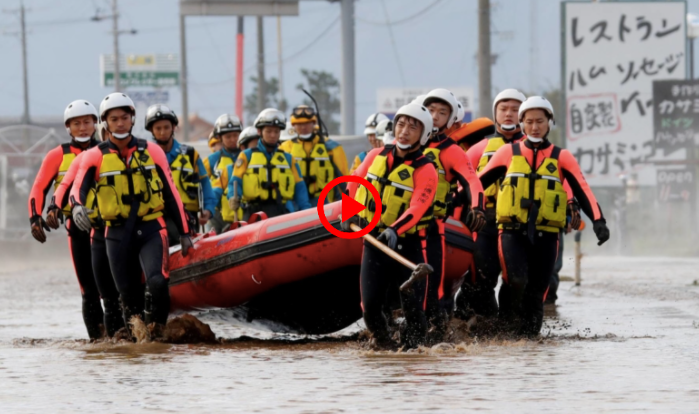
Japan is exceptionally vulnerable to climate change. The climate crisis is already affecting everything from the strength of typhoons and flooding to the timing of the cherry blossoms and autumn leaves, Eric Margolis explains in the latest Deep Dive podcast.

With weather-related disasters predicted to inflict more damage more often, startups are piling into disaster prevention and reduction, leveraging their strength in tech and their ability to quickly develop goods and services to address needs in afflicted areas.

Deep Dive podcast, Episode 104: How Japan is already being impacted by climate change | THE JAPAN TIMES Deep Dive podcast, Episode 104: How Japan is already being impacted by climate change | THE JAPAN TIMES

And no region knows more about Japan’s vulnerability to calamities than Tohoku, which bore the brunt of the triple disaster of March 2011. A number of companies around the Miyagi capital of Sendai are launching disaster tech businesses — such as apps to track people at evacuation shelters and relief supplies — thanks to initiatives by the city, the Kahoku Shimpo reports.

But weather-related disasters are not the only ecological threat Japan faces. French and Japanese researchers are analyzing samples from the archipelago’s coastal waters to study how microplastics impact ecosystems, the food chain and human health.

Little is known about the so-called plastisphere, where microorganisms live among discarded plastic, including whether some of the bacteria that thrive there could act as vectors for disease.


4. Wind power picks up speed

While Japan remains overwhelmingly reliant on fossil fuels, here are five recent signs that wind power is gaining traction in the country and its boardrooms:

Japan start-up uses turbine to harness typhoon energy | REUTERS Japan start-up uses turbine to harness typhoon energy | REUTERS

Wednesday, October 14, 2020

esg zoom 10/14

growth into culture, sustainability in funds

in last 6 years esg ne of greatest societal change waves in japan -nicholas benes

country tending to esg from opposite directions

all fund managers want to work for gpaf

japan pension fund - one of largest in world started adopting sdgs and esg stakeholder model 2015


- japan off site training previously weak so gap for esd trainers

governance capabilities vary vastly -gov code to lgt

3 different legal structures ere for gov - consequence hard 

non profit gcd trains both coroporate and institutions - go to data

access to data on esgs will be much more scrutinised in both japan and abroad- worldwide forward challenges to big conanies dont vary that much - is board inbtune with exp risks and how samrt is esg racking in the model


minako asks has roubdtable process movedon --goldberg sceptism brt statement stakeholder capitalismdue to olitics- other thing a few us journalists joining beat covering esg - journal yesteday sustainability report shareholder vs stakeholder primacy


nick brt statement reported but no immediate actions


ruben what is european view of stakeholde captalism -uk company law incude thinking impact on stakeholders- financial reporting cuncl slowly involved- so brt mainstemed esg a bit but stlill slow


-nick you said g is most impornt of esg becuae of role in governance in your region 


europe process pefectionist not always practical

what is one thing that can unite esg practitioners at cop26 nov21 glasgow remembering that scots and italains value sme networks much more than rest of europe/ do esg experts see any overlap with un artificial intel tech itu #aiforgood - ie where does deep data openness impact expoential risk  transparency at level of integrating market purpose


us problem big corporate build hi level multidisciplinary teams to feed into constant board level decision-mking - process involves such huge ongoing change few people really do it - part of 25 year long failure to audit intangibkes systemically

finsbury global hering includes dc mmerger hq - japan society great meeting- minako in tok


Wednesday, September 23, 2020


ESG INVESTING

November 2, 2020
Part of the Nichibei Global Talks Video Series

Investors are increasingly paying attention to how companies are addressing Environment, Social, and Governance (ESG) factors. On October 26, 2020, Prime Minister Suga announced Japan’s aim to achieve zero carbon emissions by 2050. “This is expected to greatly transform the Japanese economy,” said Mari Yoshitaka, Ph.D., of Mitsubishi UFJ Research and Consulting Co., Ltd., who joins Billy Nauman of Financial Times in this episode on ESG investing and the important role that U.S. and Japanese private companies and financial institutions can play to create a new, sustainable economic market. Though still in the early stages of development, ESG investing has become increasingly popular in the United States and Japan. The dialogue addresses ESG investment trends in the two markets, government policies affecting those trends, impact of COVID-19, examples of U.S. and Japanese companies ranking high in terms of ESG, shared challenges regarding ESG data disclosure and accuracy, and more.

(動画内のスライドの日本語版はこちらです): Japanese language slides

Bill NaumanBilly Nauman
Reporter, Financial Times


Billy Nauman is a reporter with the Financial Times and producer of Moral Money, the new digital platform and newsletter from the FT featuring news and analysis about the fast-expanding world of socially responsible business, sustainable finance, impact investing, environmental, social and governance (ESG) trends. Before joining Moral Money, Nauman worked in the FT’s Specialist division for nine years as a reporter and editor. Most recently, he was Managing Editor of FundFire, the FT’s daily publication covering the U.S. institutional investment industry.

Mari YoshitakaMari Yoshitaka
Principal Sustainability Strategist, Deputy General Manager of Corporate Planning Dept., Mitsubishi UFJ Research and Consulting Co., Ltd. (MURC)


Mari Yoshitaka, Ph.D., is Principal Sustainability Strategist, Deputy General Manager of Corporate Planning Dept., Mitsubishi UFJ Research and Consulting Co., Ltd. (MURC). In 2000, Yoshitaka joined Mitsubishi UFJ Morgan Stanley Securities to start up the Clean Energy Finance Committee, and transferred to MURC in May 2020. Her area of expertise is climate change policy, especially climate finance and mitigation projects, in the fields of ESG investment and SDGs business. Yoshitaka is a member of the UN Women-We Empower Japan Advisory Group and the Global Environment Committee of Central Environment Council. .

Wednesday, September 16, 2020

 brilliant continuity at sugo's ministerial steam

plus one new post shinki in charge of expo 2025- vital to unite celebrations of rising sun - reiwa era-  in every way that corona-beaten olympics could not

Tuesday, September 15, 2020

 https://www.who.int/docs/default-source/wpro---documents/events/full-programme-with-bio-0915-(2).pdf


the First Innovation Forum in the WHO Western Pacific Region (15-17 September 2020) aims to provide policy support to countries on innovation to identify, test and advance innovative approaches to pressing health problems including COVID-19.

During the 3-day virtual event, high-level policymakers and thought leaders will discuss how innovation can help countries to future-proof their health systems, and the role of WHO in supporting them. The interactive panel sessions will provide an opportunity to discuss key topics such as innovation for healthy life course, environment for health, impact-driven solutions, and harnessing digital tools for health.

Forum objectives: 

  1. Lay out a vision for innovation in health systems with societies adapting to the challenges of climate change, health security, ageing populations, chronic disease, and the aftermath of COVID-19
  2. Explore ways in which WHO could set up a platform to assist Member States to conceptualize innovative solutions, put them into action, apply them at scale, and sustain them

Participants:

  1. Top-level policymakers who make decisions on research, development and innovation
  2. Senior managers and public health practitioners who generate and manage innovation projects
  3. Advisers,experts, and thought leaders in areas relating to innovation who can support WHO and Member States (non-health official participants)
  4. Community leaders, representatives of civil society, academia, professional associations, media and private sector.
  5. General public from the Western Pacific with interest in public health and innovation.

Confirmed speakers (Full list of speakers and short bios can be found in the programme here):

  • Samira Asma, Assistant Director-General, WHO
  • Seth Berkley, CEO, Gavi, the Vaccine Alliance
  • Sandro Galea, Dean, Boston University School of Public Health; Chair, Emergency Task Force on Coronavirus & Equity, Massachusetts Public Health Association
  • Richard Horton, Editor-in-Chief, The Lancet
  • Kathy Jetñil-Kijiner, Co-founder and Director, Jo-Jikum
  • Ilona Kickbusch, Founding Director and Chair, Global Health Centre at the Graduate Institute of International and Development Studies, Geneva
  • Shiao-yin Kuik, Co-founder and Director, The Thought Collective
  • Yinuo Li, China Country Director, Bill & Melinda Gates Foundation